
Blue Green Algae Info
Blue Green Algae, Filamentous Algae, Pond Algae, Horsehair Algae, Toxic Algae, Algae Diatoms, Green Algae, Brown Algae, Pond Moss, Pond Scum
Below you will find information about different types of pond algae including blue-green algae, green algae, filamentous algae, horsehair algae, brown algae, string algae, toxic algae, algae diatoms, pond moss and pond scum. It is important to note that algae problems usually occur due to ponds being neglected. Often times people think you can simply "dig a hole" and then let the pond take care of itself. Unfortunately this is not the case. Healthy ponds require proper aeration, bacteria treatments and adequate pond weed management.
Technical Info About Algae...
Algae are primitive plants closely related to fungi. They exhibit no true leaves, stems or root systems and reproduce by means of spores, cell division or fragmentation. They "live" from excess nutrients in the water and sunlight for growth. Over 17,400 species of algae have been identified and thousands more probably exist.
Common Types of Algae
-
Planktonic Algae
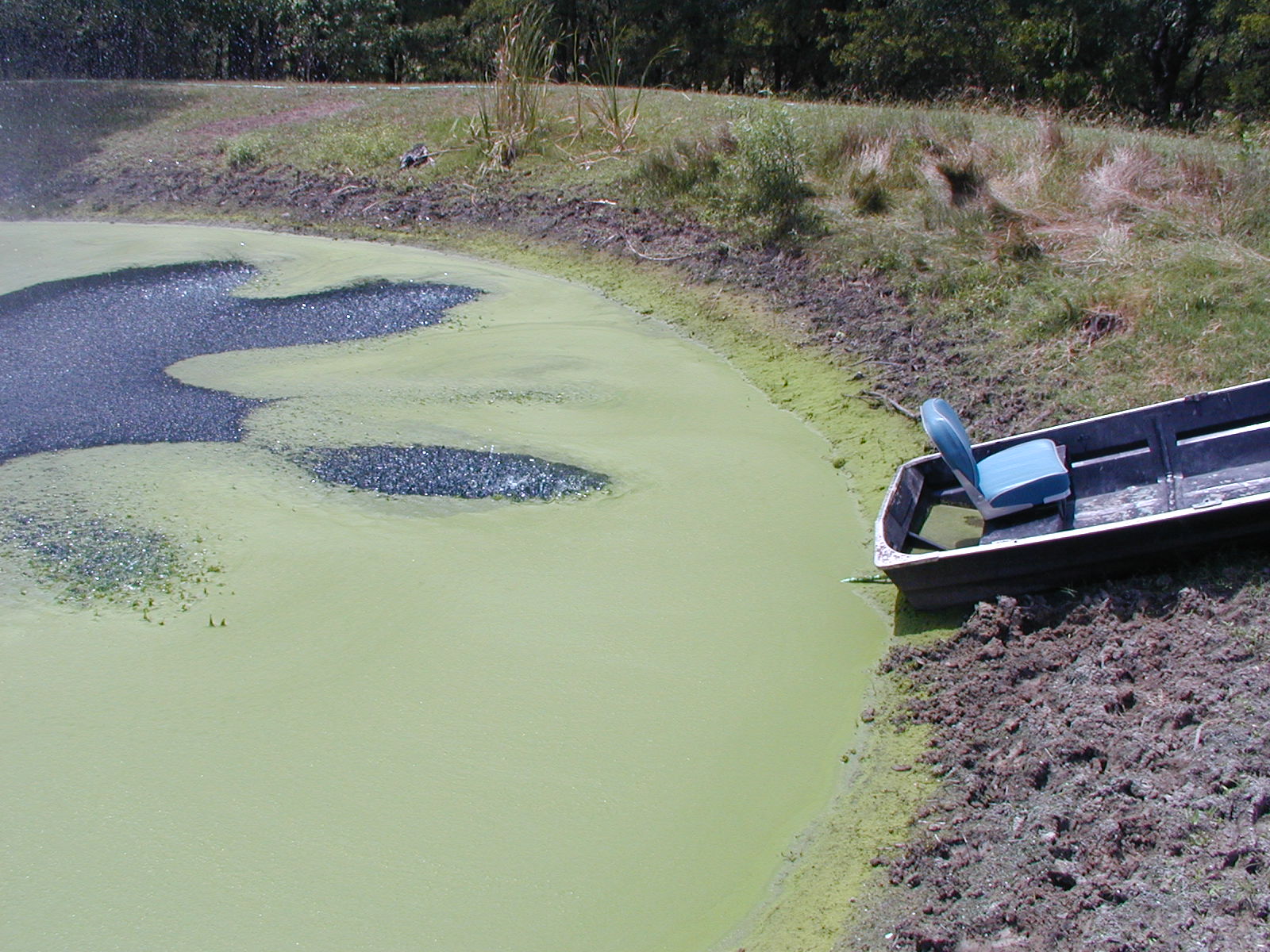
Planktonic algae are microscopic plants, usually suspended in the upper few feet of water, which often reach bloom proportions. Their presence will cause water to appear pea soup green or brownish. Natural die-off may cause summer fish kill due to oxygen depletion. Some species may be toxic to livestock, wildlife or man or impart taste and odor problems.
-
Filamentous Algae
Filamentous algae, or commonly referred to as "pond scum" or "pond moss" forms greenish mats upon the water's surface. This algae usually begins its growth along the edges or bottom of the pond and "mushrooms" to the surface. Individual filaments are a series of cells joined end to end which give the thread-like appearance. They also form fur-like growths on bottom logs, rocks and even on the backs of turtles. Some forms of filamentous algae are commonly referred to as "frog spittle" or "water net". -
Resistant Algae
* Lyngbya
Lyngbya is a blue-green algae. The species which are particularly troublesome to control are those which grow in colonies forming small spongy masses of mucilage. These blue-green, black or gray clumps made up of thousands of individual cells will lay on the bottom or float to the surface. Because of the protective mucilage, chemical control is difficult. -
Pithophora
Pithophora is a dark green filamentous algae commonly refered to as "horsehair algae". It commonly grows in coarse clumps of tangled filaments resembling pads of steel wool. Individual filaments show extensive branching. Due to its high production of reproductive cells, growth is quite prolific. Pithophora grows on the bottom and sporadically surfaces.
-
Algae Diatoms
Diatoms are a form of algae characterized by having cell walls made of silica, a mineral substance. Certain species of diatoms grow in colonies, usually on sand or concrete surfaces and produce gelatinous masses. Generally these colonies are brown to grayish in color. -
String Algae
String algae looks like long green hair. It grows primarily in shallow waters along rocks and in between plants.
Toxic Algae
Many large pond or lake owners are concerned about "toxic algae" and we'll try to address some of those concerns here.
Death and sickness to pets, livestock, wildlife and even man have been attributed to the presence of certain algae, mostly blue-green forming species, in water supplies. Lethal substances produced by these algae are retained within the cells and released after death or are secreted from living cells. Many unattended farm ponds and other waters contain some of these toxic forms, posing a threat to human health and the environment. Medical case histories, biologist reports and laboratory tests show some of the possible effects of toxic algae.
-
Humans: A list complied by the U.S. Department of the Interior Federal Water Pollution Control Administration summarizes medical case histories of algal poisonings for a 120 year period. Exposure to and ingestion of algae caused a variety of "discomforts" including: skin rashes, headaches, nausea, vomiting, diarrhea, fever, muscular pains and eye, nose and throat irritation.
-
Wildlife: Severe ecological disruptions attributed to overabundant toxic algae species have been reported.
-
Livestock: In the California State Water Resources Control Board states in their Water Quality Criteria Handbook (Second Edition): "There have been reports of rapid deaths of a great variety of animals after drinking water containing high concentrations of blue-green algae such as Microcystis, Aphanizomenon, Nostoc rivulare, Nodularia, Gleotrichia, Gomphosphaeria and Anabaena. Fatal poisonings have occurred among cattle, pigs, sheep, dogs, horses, turkeys, ducks, geese and chickens. It is believed that such algae may be toxic to all warm-blooded animals."
|
|
|
|
|
|
|
|
|
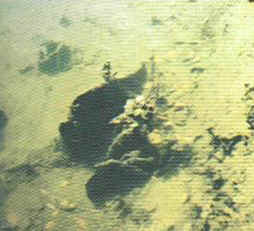
Common Aquatic Plant Infestations
-
Duckweed and Watermeal Infestation
Duckweed and watermeal are technically aquatic plants and are often mistaken for algae. Because they are a common problem in large ponds or lakes, we thought we would include them on this page. They are commonly found in quiet water in ponds with little movement. Duckweed plant is smaller than the size of a pea while watermeal is nearly granular in size.
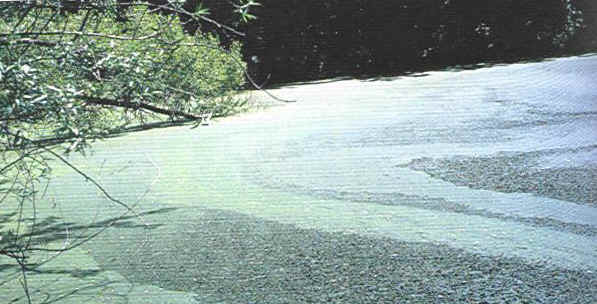
Duckweed and Watermeal Infestations
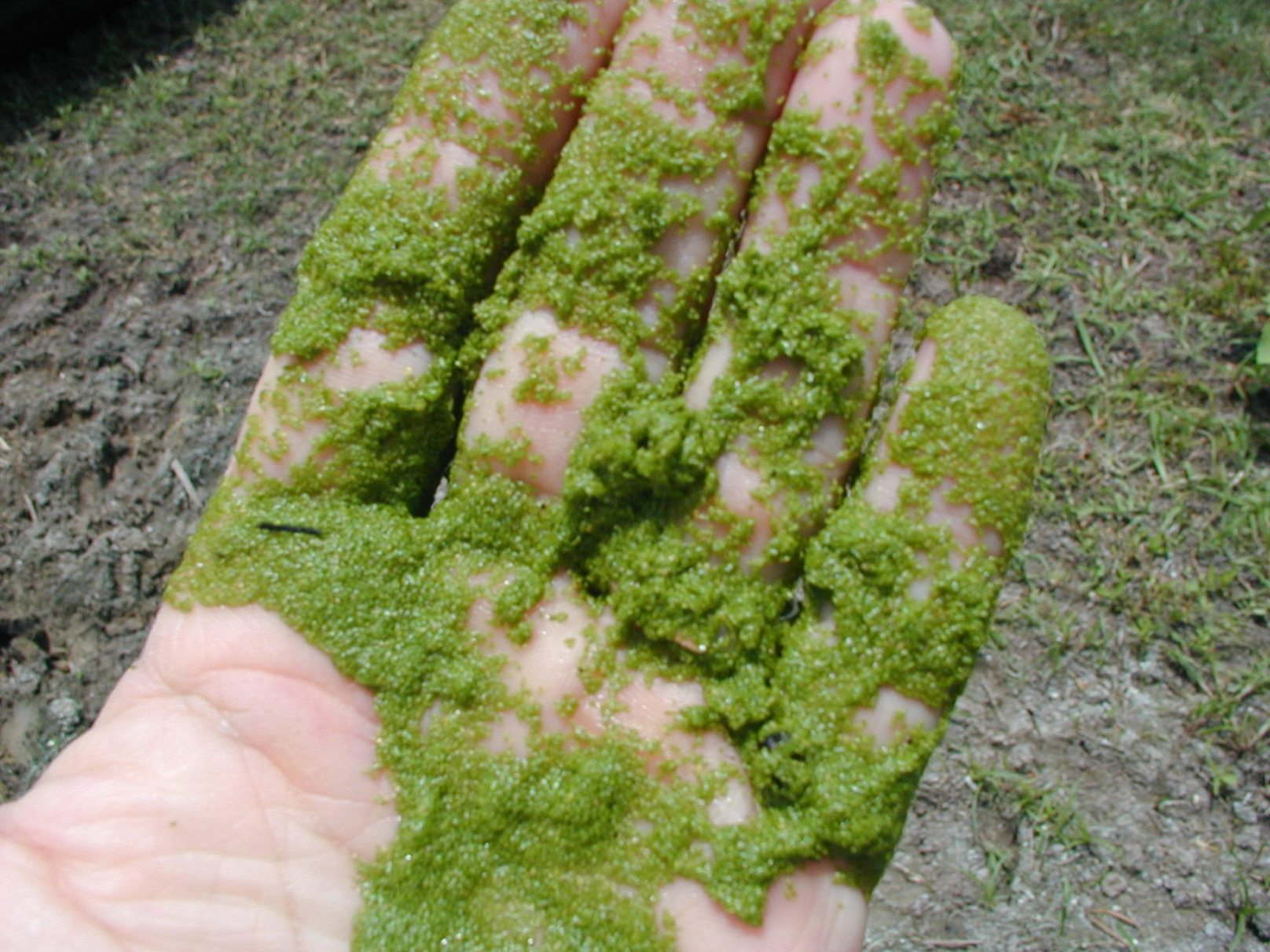
Duckweed. Super tiny plant with little leaflets and roots. Can literally cover an entire pond. Commonly transferred from pond to pond by waterfowl.
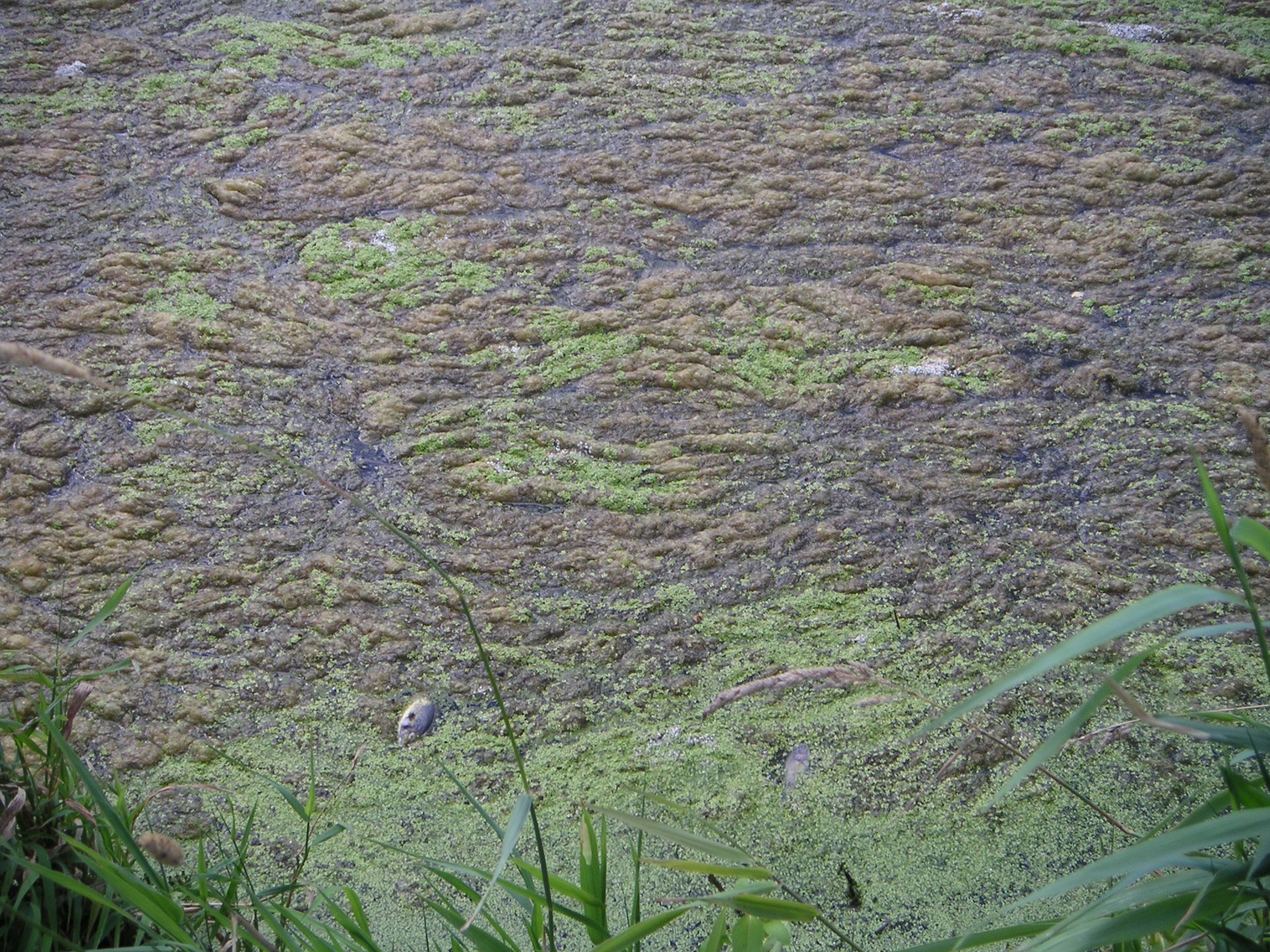
Duckweed and filamentous algae are predominant in this photo. Way too much of both for any pond which can cause fatally low dissolved oxygen levels causing fish loss.
For treatment recommendations on the above described algae or pond weeds, check out our FAQs(we have hundreds of answers to frequently asked questions) and our pond chemicalspage. Still have questions? We offer an excellent book that covers a wide variety of aquatic plant and algae problems including pictures and recommended treatments.
*NOTE: The use of copper sulfate has NOT been recommended for algae control as research and field usage have shown a high potential for detrimental environmental effects. In certain waters, copper sulfate is quite toxic to fish and other organisms. Overuse of this product is common due to its short-term effectiveness. This can result in copper build-up in the sediments leading to a sterile bottom, killing important beneficial bacteria, microorganisms, snails and other beneficial "creatures".